The Best AI Tools Right Now: Reviews Based on Clear Criteria
The best AI tool right now is not one fixed name. It is the tool that best fits your task, your data and your budget. AIToolNest reviews AI tools against public criteria rather than gut feeling. We describe what each tool does, its limits and its terms of use, and link to official sources so you can decide for yourself which tool fits.
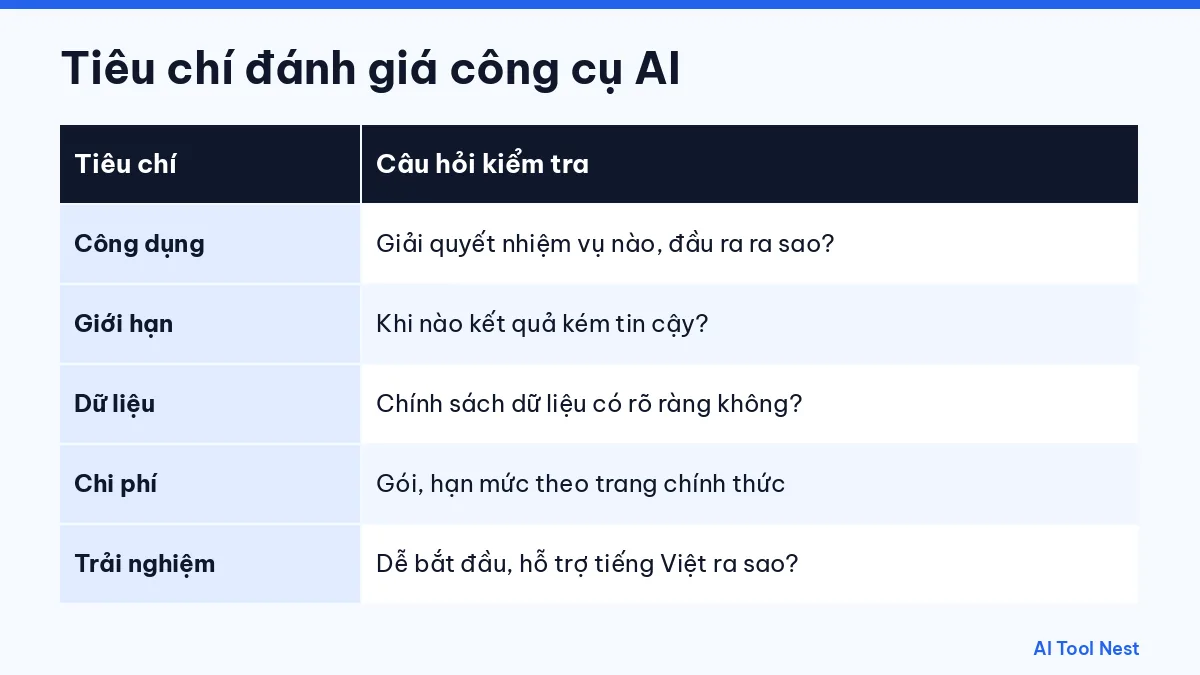
Our review criteria
| Criterion | Question we ask |
|---|---|
| Uses | Which task does the tool solve, and what does the output look like? |
| Limits | In which situations are the results less reliable? |
| Data | Are the data and privacy policies clear? |
| Cost | Plans and limits are linked to the official site |
| Experience | How easy is it to start, and how well does it handle languages other than English? |
Tools we have reviewed
- ChatGPT — a conversational AI assistant from OpenAI, available on the web and in mobile apps.
- Claude — an AI assistant from Anthropic, focused on conversation, writing and document analysis.
- Gemini — Google’s AI assistant, available on the web, in mobile apps and inside several Google products.
- Canva AI — the AI features built into the Canva design platform for creating and editing visual content.
- ElevenLabs — an AI voice platform for text-to-speech and related audio tools.
- GitHub Copilot — GitHub’s AI coding assistant, working in your code editor and on GitHub.
- Runway — an AI video platform for generating and editing video from text, images or existing clips.
The best AI tools for each need
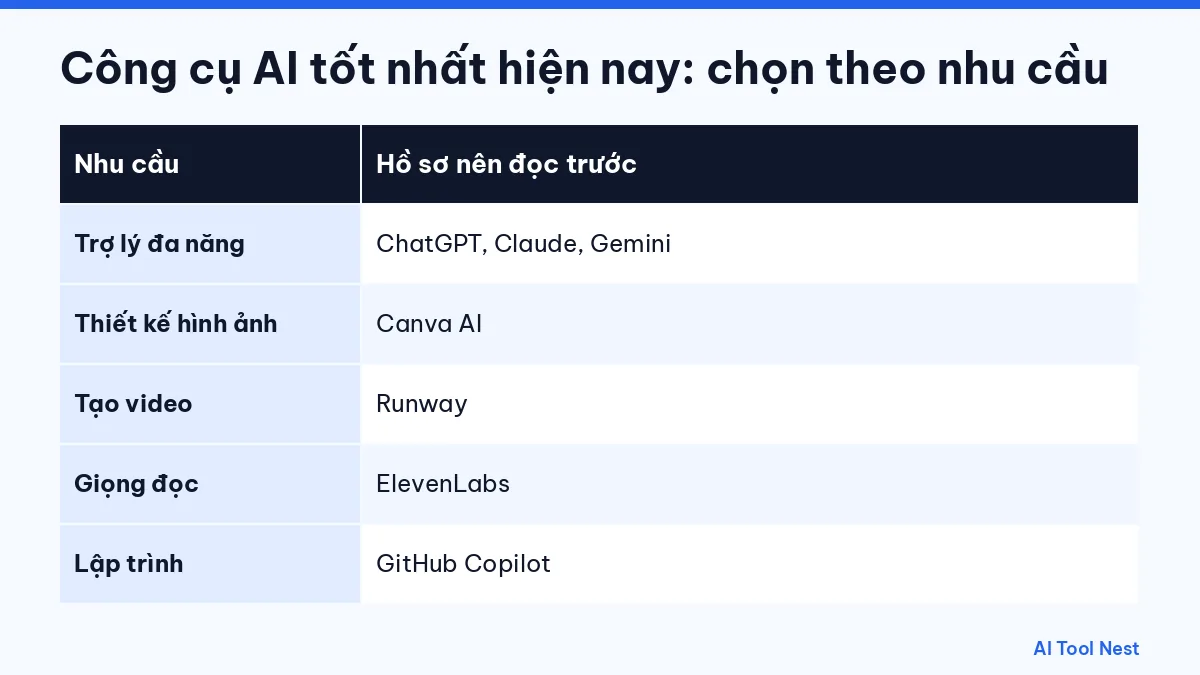
Instead of one overall ranking, the table below suggests which profile to read first for each need. It is a starting point for testing, not a verdict that one tool beats another in every case.
| Need | Read this profile first |
|---|---|
| All-purpose assistant: writing, summarizing, Q&A | ChatGPT, Claude, Gemini |
| Graphics and social posts | Canva AI |
| Creating and editing video | Runway |
| Text-to-speech voiceovers | ElevenLabs |
| Coding | GitHub Copilot |
How we write our reviews
We check information against official documentation and show the date of each update. We do not publish scores, star ratings or figures we cannot verify. Read more in our editorial policy and disclaimer.
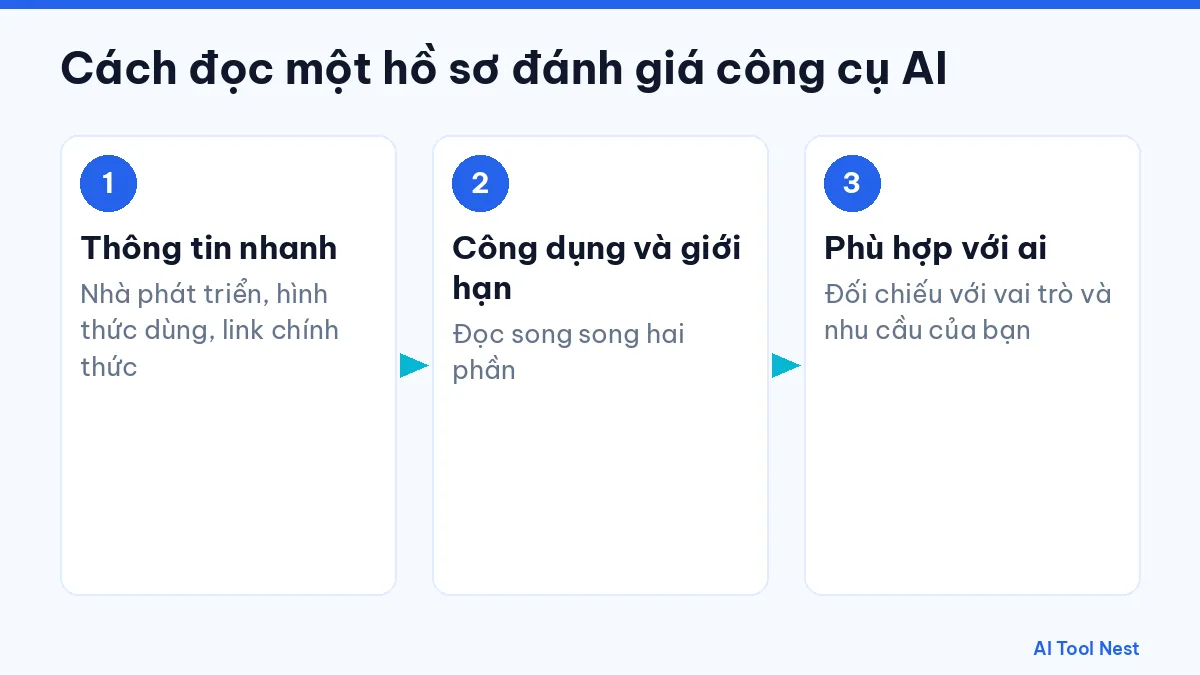
How to read a review
Quick facts
The developer, how the tool is accessed and the official link, so you can check for yourself.
Uses and limits
Read these two sections side by side; a tool with lots of features may still be a poor fit for your data or workflow.
Who it is for
Helps you quickly match the tool against your actual role and needs before you spend time testing it.
The limits of our reviews
A review reflects the information available when it was last updated. Providers can change their models, interface, pricing or policies at any time, and real-world results also depend on your prompts, language and input data. So use our reviews as a map, and test the tool on your own task before you decide to pay.
Frequently asked questions
Do your reviews include scores?
For now we describe tools against criteria instead of scoring them, to avoid numbers without a solid basis.
Are your reviews sponsored?
Our rules on sponsorship and affiliate links are set out in our editorial policy.
Can I suggest a tool for review?
Yes, send the details through our contact page.
Conclusion
A review is only a starting point; test the tool on your own task. See our tool comparisons or go back to the homepage.
Sources: ChatGPT, Claude, Gemini, Canva AI, ElevenLabs, GitHub Copilot, Runway.